ADM MIGATION PATH - OVERVIEW
There are three obvious steps for broadcasters to migrate to ADM.
One-by-one they form a gradual way of implementation and adding complexity when
advancing from conventional - "legacy" - audio to object-based production and NGA delivery
STEP 1. ADM4Legacy
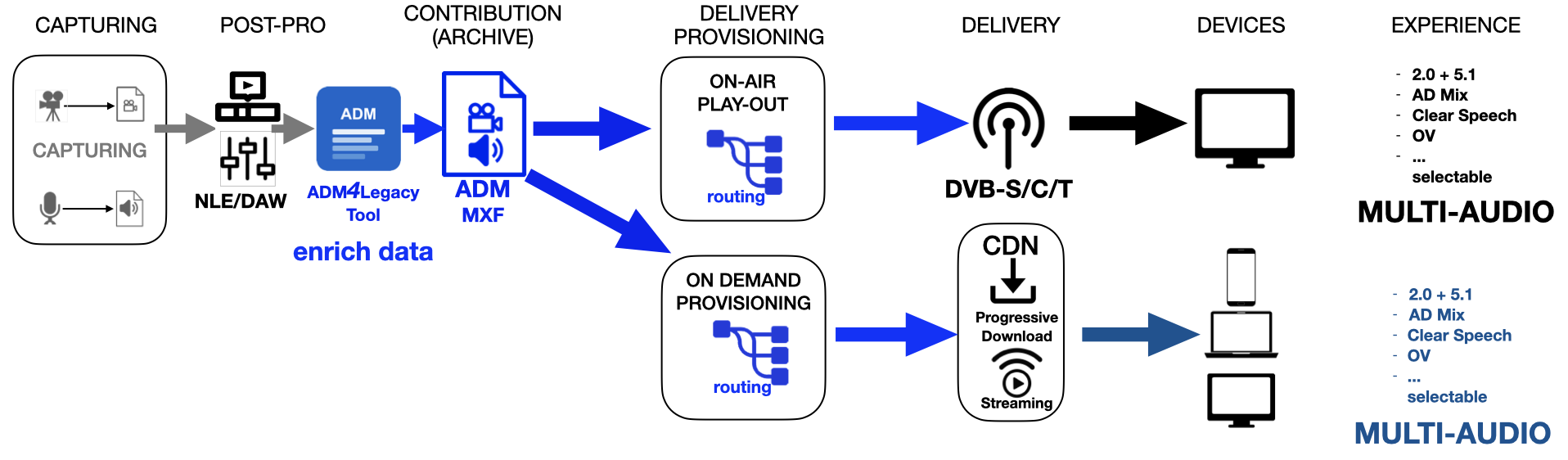
For existing conventional channel-based production and distribution workflows
- no object-based/NGA production and rendering required
- ADM applied only as inherent descriptor for tech specs of file (track-layout, audio format content type, languages, loudness etc.)
- benefits are:
-> no (more) sidecar file workflows or paperwork required
-> enabling track-routing and automation in workflows
-> driving on-air and on-demand MULTI-AUDIO delivery
->ADM2Legacy provides more details of this stage.
STEP 2. ADM2Legacy
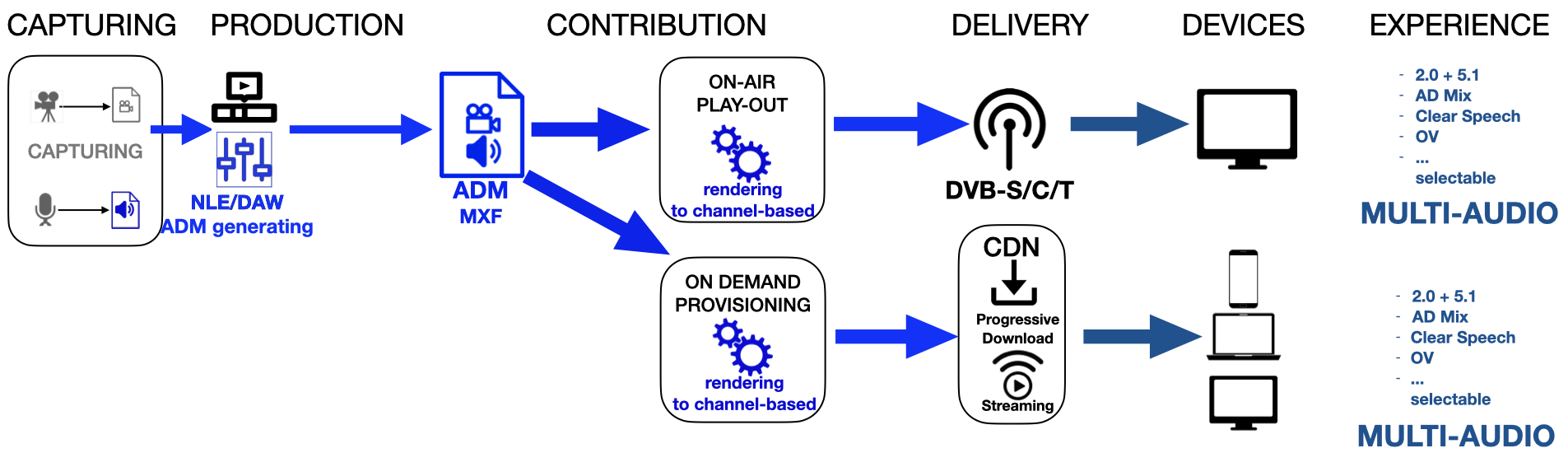
First migration step to benefit from efficient object-based ADM production techniques - without (yet) NGA delivery options
- ADM/S-ADM applied for genuine object-based mixes
- delivery to conventional, "legacy" channel-based audio codecs requires hosted ADM rendering
- benefits are:
-> sources and stems kept separately (smaller track counts, re-usability)
-> scalable, multiple rendering format as required (2.0, 5.1. 5.1.4, binaural)
-> driving on-air and on-demand MULTI-AUDIO delivery
->ADM2NGA provides more details of this stage.
STEP 3. ADM2NGA
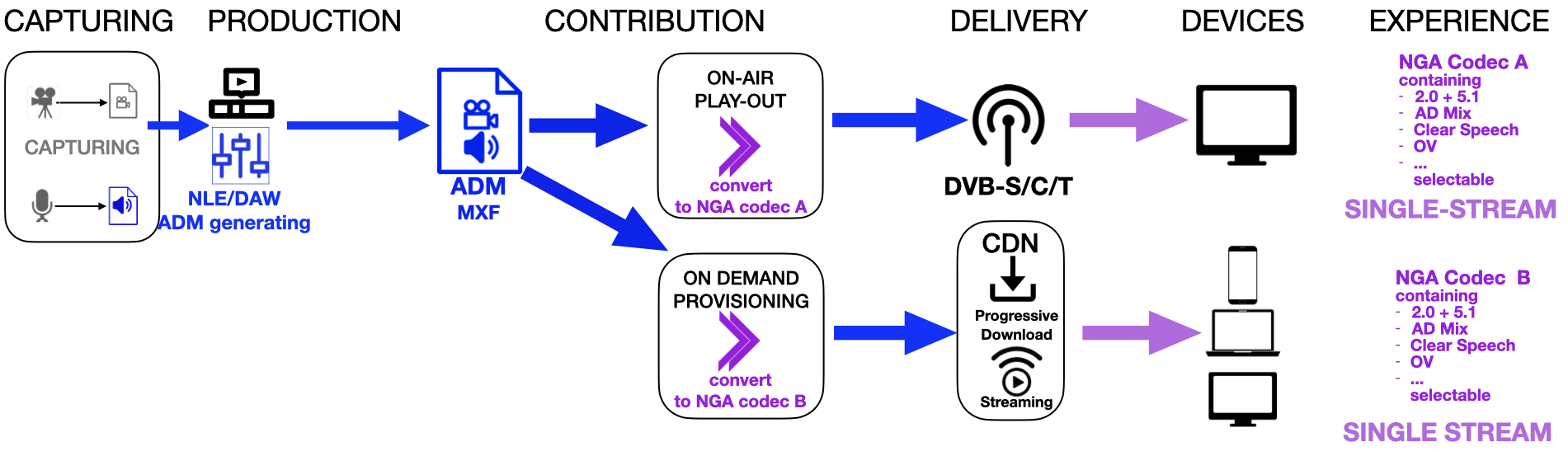
Ultimate move to end-to-end ADM-NGA production and delivery chain.
- ADM/S-ADM applied for genuine object-based mixes
- sources and stems kept separately (smaller track counts, re-usability)
- enabling conversion into mutliple NGA codecs (AC-4, MPEG-H, Eclipsa) as required by platforms
- each NGA audio stream may contain multiple presentations/presets
- rendering on NGA capable device allows user best possible personalisation for
-> Speech Intelligibility
-> Multi-Language/Audio Description
-> Immersive Reproduction -> Loudness Adaptability et. al.
->The ADM Studio is a paradigmatic implementation of this stage.